
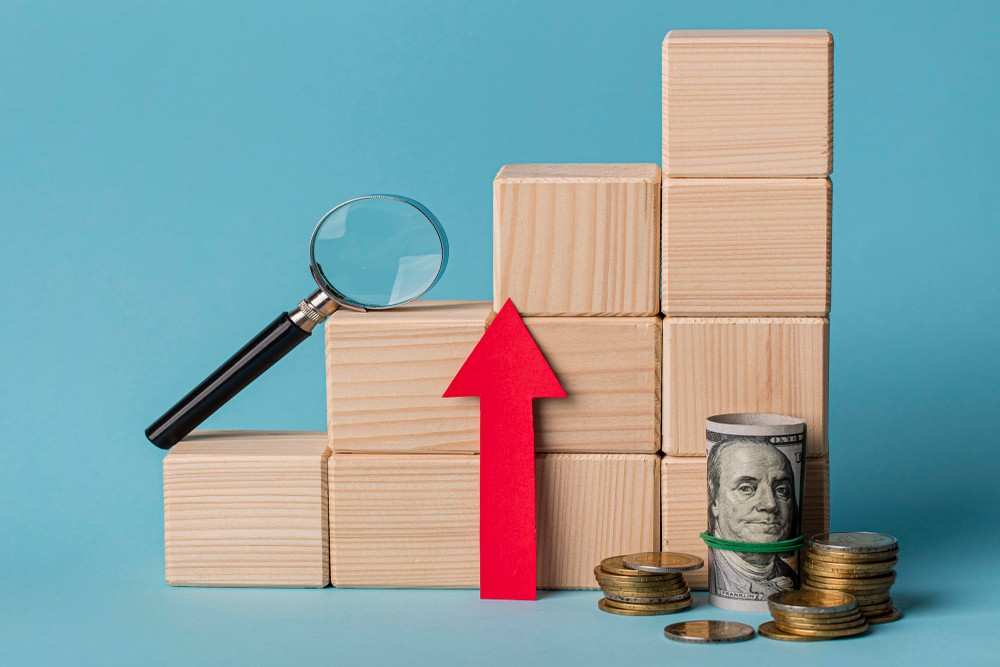
If your marketing budget is draining fasteIf your marketing budget is draining faster than your sales pipeline is filling up, learning how to reduce cost per lead (CPL) must become your top priority. CPL is undoubtedly one of the most critical metrics in digital marketing, revealing exactly how much capital is required to acquire a single prospective customer.
When you reduce cost per lead, you don’t just save money; you unlock the ability to scale your campaigns and dramatically improve your overall Return on Investment (ROI). Here is your actionable, data-driven guide to lowering your acquisition costs without sacrificing lead quality.
Quick Summary: How to Reduce Cost Per Lead Instantly
For marketing teams looking for immediate action items, here are the fastest ways to lower your acquisition costs right now:
- Narrow your audience targeting to exclude irrelevant, low-intent clicks.
- A/B test your landing pages to systematically increase conversion rates.
- Shift budget from low-performing channels to high-performing campaigns.
- Use retargeting ads to capture visitors who didn’t convert the first time.
- Improve your ad Quality Score to lower your Cost Per Click (CPC).
What is Cost Per Lead (CPL)?
Cost Per Lead (CPL) is a core performance metric that calculates the total cost of acquiring a new lead. A lead is defined as any prospect who has shown interest in your product or service by providing their contact information.
The CPL Formula:
Total Marketing Spend / Total New Leads Generated = Cost Per Lead
For example, if you spend $1,000 on a Google Ads campaign and generate 50 leads, your cost per lead is $20.
High CPL vs. Optimized CPL
Understanding where your campaigns currently stand is the first step to improvement. Use this table to diagnose your current setup:
| Metric | High CPL Indicators | Optimized CPL Indicators |
| Audience | Broad, undefined targeting | Highly segmented, intent-based |
| Landing Page | Cluttered, slow loading, multiple CTAs | Fast, single-focus, benefit-driven |
| Ad Copy | Generic, mismatched with landing page | Highly relevant, strong hook, clear offer |
| Budget | Spread thin across all platforms | Concentrated on top-performing channels |
Proven Strategies to Reduce Cost Per Lead
1. Optimize Your Target Audience
Casting a wide net is the absolute fastest way to inflate your acquisition costs. If you want to systematically reduce cost per lead, you must stop showing ads to people with zero buying intent.
- Use Lookalike Audiences: Upload your best customer lists to platforms like Meta or LinkedIn to find users with similar behaviors and demographics.
- Implement Negative Keywords: In search campaigns, use negative keywords aggressively to prevent your budget from being wasted on irrelevant queries.
- Refine Firmographics/Demographics: Narrow down your audience by job title, industry, income level, or geographic location.
2. Improve Landing Page Conversion Rates (CRO)
You can drive the cheapest traffic in the world, but if your landing page doesn’t convert, your CPL will remain unsustainably high. Conversion Rate Optimization (CRO) is an essential strategy to reduce cost per lead.
- Message Match: Ensure the headline on your landing page exactly matches the promise made in your ad copy.
- Reduce Form Friction: Every extra field on a lead capture form lowers the conversion rate. Only ask for the information you absolutely need.
- Speed it Up: A one-second delay in page load time can drop conversions significantly. Optimize your visual assets and background scripts.
3. Leverage Retargeting Campaigns
Most first-time visitors to your website will not convert. Fortunately, retargeting allows you to serve ads to people who have already engaged with your brand. Because they are already familiar with you, their likelihood to convert drastically increases. This is a highly effective way to reduce cost per lead across your entire marketing mix.
4. Boost Your Ad Quality Score
Platforms like Google Ads and Meta Ads use a “Quality Score” or “Relevance Score” to determine how much you pay per click. High-quality, highly relevant ads cost less to run.
- Improve Click-Through Rate (CTR): Write compelling ad copy with a strong Call-to-Action (CTA).
- Ad Relevance: Ensure your keywords, ad copy, and landing page are all tightly themed.
5. Create High-Value Lead Magnets
If you are still struggling to reduce cost per lead, your offer might simply not be enticing enough. Instead of a generic “Contact Us” prompt, offer something of tangible value in exchange for their information. High-converting examples include industry data reports, exclusive webinars, or actionable templates.
CPL Optimization: Your Growth Questions Answered
1. Is a lower CPL always better for my business? Not necessarily. While the goal is to reduce cost per lead, you must avoid the “low-quality trap.” If you lower your CPL by targeting a very broad, low-intent audience, you might end up with thousands of leads who have no intention of buying. This actually wastes your sales team’s time and increases your Cost Per Acquisition (CPA). The sweet spot is finding the lowest possible cost for a qualified lead—someone who actually fits your ideal customer profile.
2. How long should I wait before deciding a campaign’s CPL is too high? You should generally wait until you have a statistically significant amount of data, which usually means waiting for the campaign to exit the “Learning Phase” (about 7 days or 50 conversions on platforms like Meta and Google). During the first few days, CPL is often volatile as the algorithm tests different audiences. If your CPL remains 2–3 times higher than your target after 14 days, it’s time to pause the ad and reassess your creative or targeting.
3. What is the most effective way to lower CPL without changing my budget? The most impactful lever you can pull is Conversion Rate Optimization (CRO) on your landing page. If you spend $1,000 to get 1,000 clicks and 5% convert, you get 50 leads ($20 CPL). If you simply improve your landing page design or headline so that 10% convert, you get 100 leads from that same $1,000 spend—instantly cutting your CPL in half to $10 without spending an extra dime on ads.
Strategic Takeaways for CPL Optimization
Working to reduce cost per lead is not a one-time initiative, but rather a continuous cycle of strategic alignment, data analysis, and iterative testing.